The Complete Lash Extension Aftercare Guide: How to Protect Your Lashes Between Appointments
You just walked out of your lash appointment feeling like a completely different person. Your eyes look bigger, your morning routine just got shorter, and you are already planning your next set. But here is the thing nobody tells you clearly enough: what you do in the next few days and weeks will determine whether those lashes last two weeks or five.
Think of it like this. Your lash artist controls everything that happens in the chair. You control everything that happens after you leave. Retention is a partnership, and your aftercare routine is your half of the deal.
This guide covers everything a beginner needs to know to protect their investment, from the critical first 48 hours, through to daily cleansing, product choices, sleep habits, and knowing when to book your infill. Whether you are brand new to extensions or have had a few sets that did not last as long as you hoped, you will find practical, straightforward advice here. No overwhelming lists of rules, just a clear routine that keeps your lashes looking full, fresh, and healthy for as long as possible.
The First 48 Hours: Why This Window Makes or Breaks Retention
The lash adhesive used to bond your extensions to your natural lashes does not finish curing the moment you leave the studio. Most lash artists recommend avoiding moisture, heat and friction for the first 24 to 48 hours while the adhesive fully cures, as anything that disrupts that process weakens the bond before it has fully formed.
As a general aftercare rule, avoid water near the eye area, steam, saunas, swimming, hot yoga and any activity that causes significant sweating during this window. Even a long hot shower where steam builds up around your face can affect early bond strength. Skip the gym, the steam room and any high-heat environment for the first two days. It is a short pause that pays off considerably.
Resist the urge to touch or rub your eyes, too. New extensions can feel slightly unfamiliar at first, which makes this harder than it sounds. Leave them alone and let the adhesive do its job.
If you are curious about the wider picture of what undermines retention, The 7 Biggest Mistakes That Ruin Lash Retention is worth reading alongside this guide.
No single stretch of your aftercare routine carries more weight than these first two days. Get this part right, and everything that follows builds on a much stronger foundation.
Daily Cleansing: The One Habit You Cannot Skip
From day three onwards, one habit determines how long your set lasts: cleansing.
Skipping the cleanse is one of the most consistent aftercare mistakes that leads to early shedding. Oil, makeup residue, dead skin cells and bacteria accumulate at the lash line every day, and over time that build-up weakens the adhesive bond from the root up. A clean lash line holds; a dirty one does not.
How to cleanse correctly:
Apply an oil-free lash cleanser directly to a soft-bristled lash cleansing brush
Work in gentle downward strokes along the lashes, from base to tip
Rinse thoroughly with lukewarm water
Pat dry with a lint-free cloth, never rubbing
Brush through with a clean spoolie once dry
Avoid cotton pads and cotton wipes entirely. The fibres catch on extensions, create micro-friction at the bond, and often leave lint behind.
Cleanse at least once daily. If you wear eye makeup or exercise, cleanse after each instance rather than waiting until your usual routine. Sweat and makeup both deposit residue at the lash line quickly.
One of the most persistent myths is that lashes should be kept completely dry. The opposite is true. Regular gentle cleansing protects your lashes; it is the lack of cleansing that causes damage. The lash bond is designed to withstand moisture during normal wear; what it cannot withstand is a sustained build-up of oil and debris going unchecked.
Products That Shorten Retention (And How to Spot Them)
Oil-based products are the most common invisible threat to retention, and they appear across your full skincare and makeup routine, not just your cleanser.
Oil breaks down the cyanoacrylate adhesive that bonds extensions to your natural lashes. The most common lash retention mistakes clients make often come down to products they did not realise were oil-based.
Common offenders include:
Oil-based makeup removers and cleansing balms
Micellar waters that contain oils (not all do, so check the label)
Rich eye creams applied close to the lash line
Facial oils used as part of a night routine
Waterproof mascara
Waterproof mascara creates a double problem: the formula itself is not lash-safe, and removing it almost always requires an oil-based product, making oil contact effectively unavoidable.
How to read an ingredient list
Flip any product over and scan the first five ingredients. Watch for anything ending in -ate or -yl (isopropyl palmitate, cetyl alcohol), and any mention of mineral oil, coconut oil, argan oil, or any word with "oil" in it. If these appear near the top, the formula is likely too rich to use near your extensions.
Hair conditioner is another overlooked source of oil transfer. Shampoo and condition first, rinsing conditioner down the back of your head rather than forward over your face, then secure your hair before cleansing your lashes last.
Lash-safe alternatives exist for everything: gel or water-based eye makeup removers and lightweight oil-free moisturisers work well without affecting the bond.
Sleep Position, Pillowcases and Reducing Overnight Friction
What you put on your lashes matters, but so does what happens when the lights go out.
Face-down sleeping is the most damaging position for extensions. Pressing your lashes directly into a pillow creates friction that tangles volume fans, pushes individual lashes out of alignment, and speeds up shedding overnight. If you can train yourself to sleep on your back, that single habit change will make a noticeable difference to how your set holds up between appointments.
If back sleeping is not realistic for you, a silk or satin pillowcase is the next best step. Cotton's woven texture creates more drag against lash fibres than smoother fabrics, catching against extensions as you move in your sleep. Silk and satin allow the lashes to glide rather than snag, which significantly reduces the friction generated against the extensions throughout the night.
For committed side sleepers who struggle to shift position, a contoured lash pillow is worth considering. These are designed with a small recessed section that takes direct pressure off whichever eye faces the pillow, making it easier to protect your lashes without overhauling your entire sleep routine. More practical guidance like this is available in The Lash Lab journal.
Never pull or tug at lashes that feel stuck or crossed after sleep; work slowly with a clean spoolie and let it do the work.
Heat, Steam and Lifestyle Factors That Affect Your Lashes
Beyond the initial curing period, heat and lifestyle factors continue to matter.
Lash artists consistently advise avoiding sustained heat sources near the eye area. Saunas, steam rooms, blow-dryers held too close to the eye area, oven doors opened at face level, and candle flames or lighters near the face can all gradually weaken the bond. None of these are reasons to panic, but they are worth factoring into your routine.
When drying your hair, switch to a cool or warm setting and direct the nozzle away from your face. A diffuser attachment is a practical option if you use one regularly.
If you exercise regularly, you do not need to avoid it. Sweat itself is the issue rather than the activity; salt and oil residue that builds up at the lash line will affect retention if left uncleansed. A gentle cleanse after training keeps things on track.
Swimmers should rinse lashes with clean, fresh water immediately after leaving the pool or sea, then follow up with a proper cleanse. Lash artists consistently advise that repeated exposure to chlorine and salt water can weaken adhesive bonds over time.
If hot yoga, steam rooms, or a high-heat work environment is a regular part of your life, infills may be needed a little earlier than the standard two to three week window. Mention this at your consultation so your lash artist can set realistic expectations and recommend a style that works with your lifestyle. You can find more guidance in The Lash Lab's lash and brow advice journal.
Brushing, Spoolie Use and Day-to-Day Maintenance Habits
Beyond the lifestyle factors covered above, daily maintenance comes down to one small tool used consistently: your spoolie brush.
Brushing once or twice a day keeps volume fans separated, stops lashes from crossing over each other, and maintains the even look of your set between appointments. It takes about ten seconds and makes a noticeable difference by the end of the week.
Brush when your lashes are dry or slightly damp, not soaking wet. Wet lashes carry more weight, which makes them more vulnerable to distortion if you apply too much pressure. After cleansing, pat dry first, then brush.
When you do brush, use light downward strokes from the base outward, following the natural growth direction. If a lash resists, do not tug at it. Leave it alone and it will usually settle on its own.
Skip mascara entirely on extensions. It clumps volume fans together, is almost impossible to remove without tugging or oil-based products, and leaves residue that builds up at the bond over time. All of that shortens retention. If you find yourself reaching for mascara, it is worth mentioning at your next appointment; a fuller lash style may give you the density you are looking for without needing any product on top.
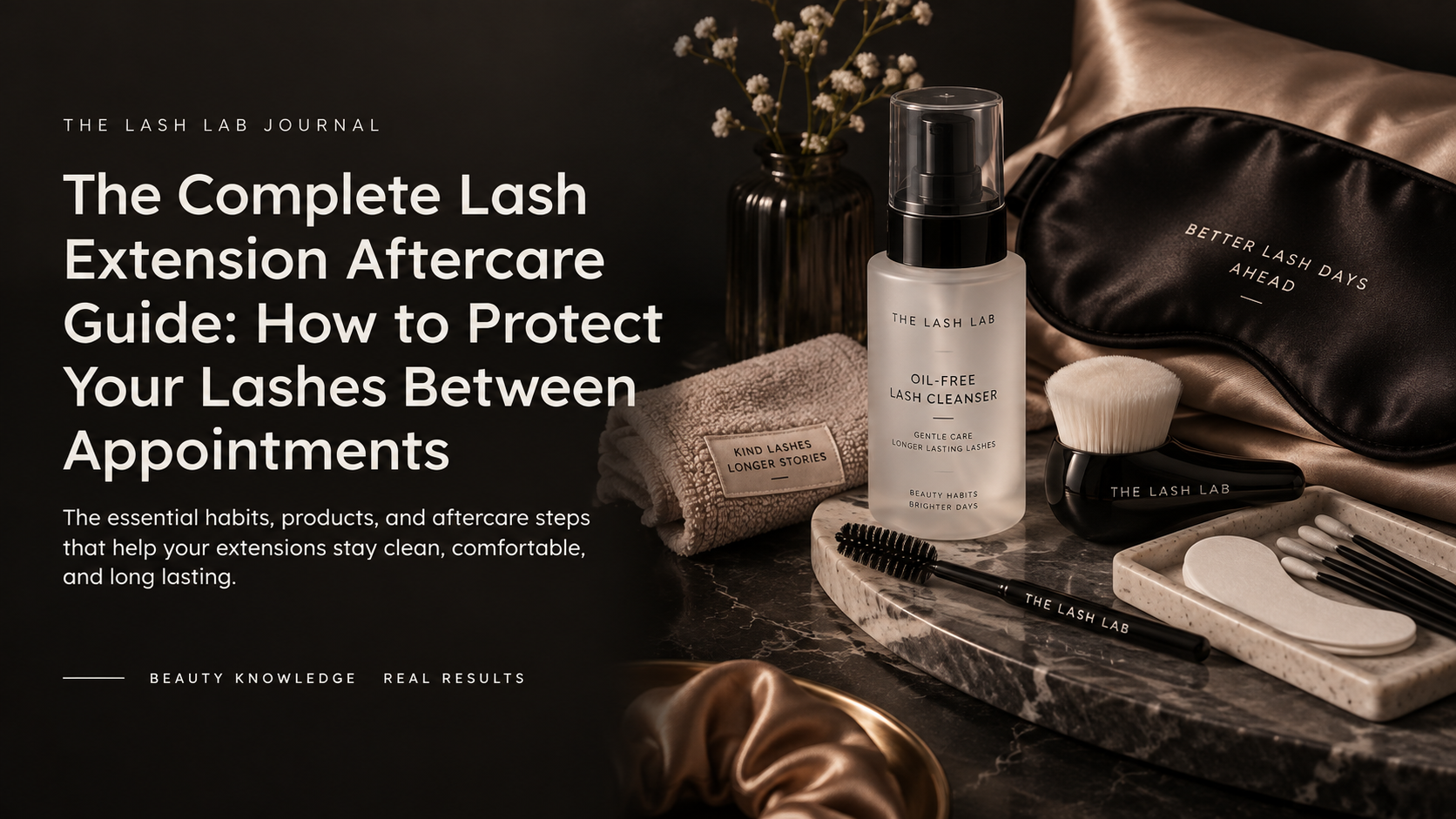
Finally, having the right tools within reach makes the routine far easier to stick to. A basic lash aftercare kit typically includes a cleanser, spoolie and guidance card. When everything is already on your bathroom shelf, there is very little friction between knowing what to do and actually doing it.
Looking After Your Natural Lashes, Not Just Your Extensions
All of the habits covered so far protect your extensions. This section is about protecting what sits underneath them.
Every extension is attached to a single natural lash. If those lashes are weak or stressed, no amount of good aftercare will make a set perform as it should. Natural lash health is the foundation everything else rests on.
Watch for noticeable thinning between appointments, lashes that feel brittle when extensions shed, or a slower-than-usual regrowth rate. These are worth mentioning to your lash artist. You can read more about recognising signs of lash damage and what to do about them in The Lash Lab journal.
One of the most common causes of mechanical damage is pulling or picking at extensions as they grow out. Removing an extension by force often takes the natural lash with it. Leave shedding extensions alone and let them fall when they are ready.
If you are considering a lash serum, check the ingredients before using it alongside extensions. Some growth serums contain prostaglandin analogues, which carry potential side effects, and others contain ingredients that may interfere with the bond, check with your lash artist before adding any new serum to your routine. Look for a serum specifically listed as extension-safe.
For anyone new to extensions or returning after a gap, a consultation lets your lash artist assess your natural lashes and recommend a style and weight that suits their current condition rather than overloading them.
Occasionally taking a break from extensions, particularly after a long period of continuous wear, allows your natural lashes to complete a full growth cycle without added weight. It is not always necessary, but worth considering if you notice any of the signs above.
Knowing When to Book Your Infill
Once your natural lashes are in good condition and your aftercare routine is consistent, timing your infill becomes the final piece of the retention puzzle.
With consistent aftercare, most clients find a healthy window of two to three weeks before an infill is needed. As your natural lashes shed, the extensions attached to them go with them. Noticing a few extensions coming away each day is completely normal and not a sign that anything went wrong during your appointment.
If you are losing noticeably more than a few, seeing patchy or uneven gaps, or finding extensions falling away within the first week, take a close look at your aftercare routine before drawing any conclusions about the application. Oil exposure, heavy eye creams, or skipping your daily cleanse are far more likely culprits than a bonding issue.
For the fullest-looking set, most clients find the two to two-and-a-half week mark is the sweet spot for booking an infill. In most artists' experience, waiting beyond three weeks means more natural shedding has already occurred and restoring the set takes considerably longer.
If your retention has dropped compared to previous appointments, mention it at your next visit. Clients often notice retention changes alongside skincare changes, new medications, hormonal shifts, or seasonal humidity shifts. You can also review The Lash Lab's booking and service terms for guidance on infill timing and appointment policies.
The simplest way to stay within the optimal window is to book your next infill before you leave the studio.
Your Aftercare Routine Is Half the Result
Good aftercare and a timely infill appointment work together. Neither one compensates for the absence of the other.
At The Lash Lab, the studio side covers application quality, mapping, and bond placement. Everything after you leave is yours to protect. A quick daily routine is genuinely all it takes, and consistent habits, not complicated ones, are what move the needle on how long your set lasts and how healthy your natural lashes remain underneath.
If you would like a straightforward way to keep those habits in place, ask about The Lash Lab's aftercare kit at your next appointment. It takes the guesswork out of knowing what products are safe to use.
New to extensions or thinking about booking for the first time? The Lash Lab is based in Sligo and sees clients from right across the North West of Ireland. Every appointment includes a consultation and aftercare guidance, so you leave knowing exactly how to look after your lashes, not just hoping for the best. [Get in touch or book online]([BOOKING URL]) to get started.
Conclusion
Lash extensions reward the clients who look after them. The key takeaways are straightforward: protect the bond during the first 48 hours, cleanse daily with an oil-free formula, avoid oil-based and waterproof products, and book your infill before gaps become damage.
Your technician handles the application. Everything between appointments is in your hands, and it genuinely does not have to be complicated. A few consistent habits each day make the difference between a set that lasts and one that disappoints.
If you are ready to experience extensions that actually hold, The Lash Lab in Sligo is here to help. Every appointment comes with expert application and personalised aftercare guidance. [Book online today]([BOOKING URL]) and leave your first appointment knowing exactly how to protect your investment from day one.