Two clients can book the same lash treatment and leave with beautifully different results. That is because the treatment name—Classic, Hybrid, Volume or Wispy—describes only part of the design. Lash mapping determines how the chosen technique is arranged across the eye.
At The Lash Lab in Sligo, mapping is part of creating a bespoke result. Length, curl, fullness and placement are considered together rather than applying one standard pattern to every client.
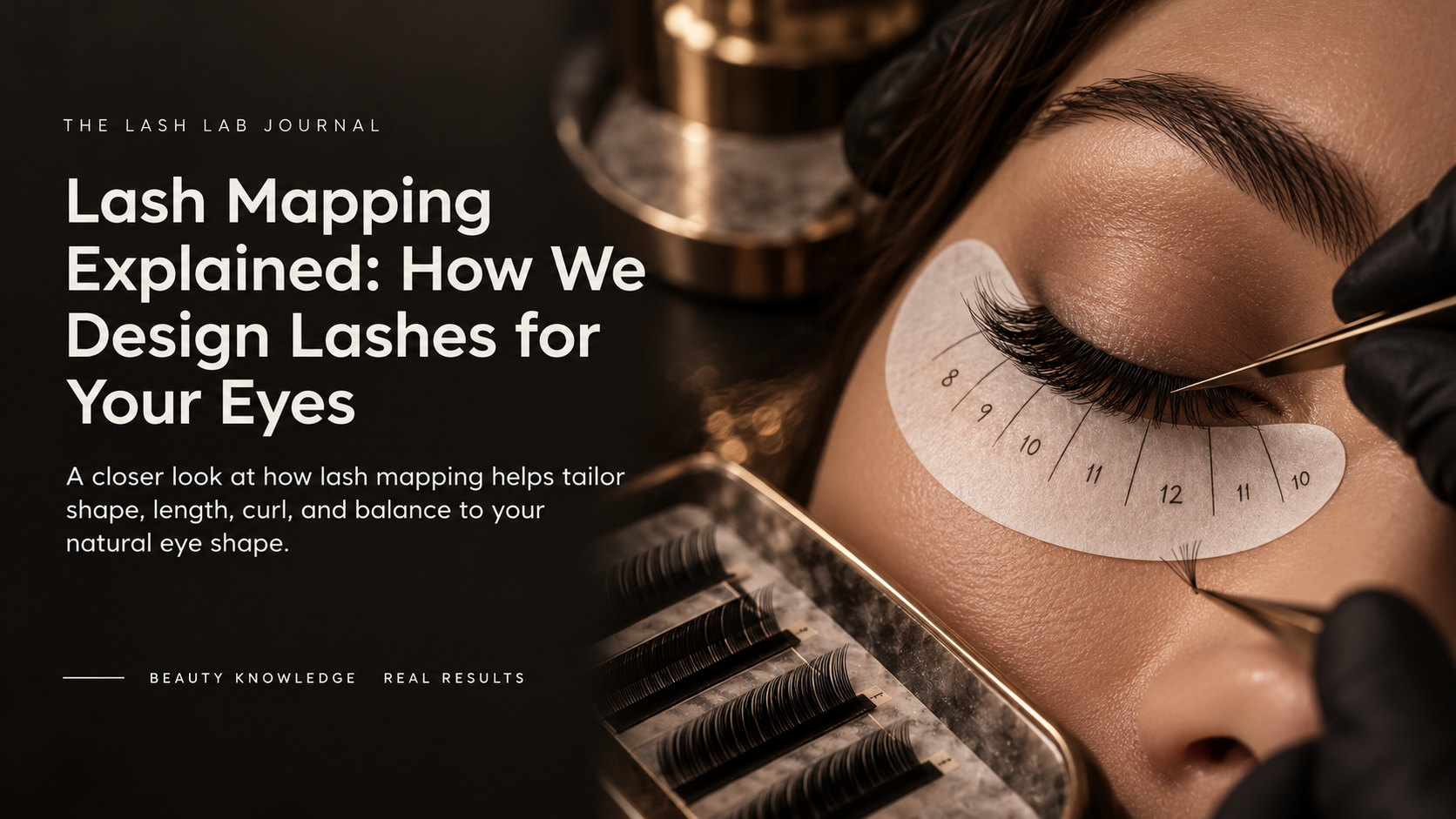
What is lash mapping? Discover how length, curl, density and placement are planned to create bespoke lash extensions around your eyes and natural lashes.
What is lash mapping?
Lash mapping is the plan used to organise the lash design across different sections of the eye. It helps guide where lengths change, where visual emphasis sits and how the overall shape progresses from the inner corner to the outer lashes.
A map is not simply a row of numbers. The same lengths can look different depending on curl, natural lash direction, eye shape and the technique being used.
The four elements behind a lash map
1. Length
Length influences where the eye is visually emphasised. Longer extensions can draw attention to a particular area, while shorter lengths help create transitions and protect finer natural lashes where appropriate.
2. Curl
Curl affects how visible and lifted the extensions appear from the front. The right choice depends on natural lash direction, lid structure, the desired finish and product suitability. A stronger curl is not automatically more flattering.
3. Density and technique
Classic, Hybrid, Volume, Wet Look and other techniques distribute visual weight differently. A Classic map may look crisp and individually defined, while the same general shape in Volume can appear softer and fuller.
4. Placement and texture
Placement determines where the eye is opened, elongated or lifted. Texture adds another dimension: Wispy sets use deliberate peaks and variation, while Wet Look styling uses narrow, defined spikes.
Common lash-map effects
Lash artists may use terms such as natural, doll/open-eye, squirrel or cat-eye to describe broad visual effects. These are useful references, but they should not be treated as fixed templates. A dramatic outer-corner extension that suits one client may visually pull another eye downward, for example.
Why the same map does not suit everyone
Eye shape is only one consideration. Natural lash density, growth direction, lash strength, symmetry between the eyes, lid space and facial proportions can all change how a map performs.
Personal preference matters too. One client may want a subtle everyday result; another may want visible texture or stronger definition. Bespoke design balances those preferences with what the natural lashes can safely support.
How natural lashes influence the design
Mapping cannot ignore the foundation underneath. If a natural lash is finer or less able to support a requested extension, length or weight should be adjusted. A technically attractive map is not successful if it disregards natural lash suitability.
Mapping Classic, Hybrid, Volume and Wispy differently
Classic mapping emphasises the placement of individually defined extensions. Hybrid adds the decision of where Classic lashes and Volume fans should sit. Volume allows fullness and fan spread to shape the overall silhouette. Wispy styling introduces planned spikes, so their height, spacing and relationship with the shorter base layer become part of the map.
Wet Look styling similarly depends on the rhythm and placement of narrow closed fans to create its characteristic defined texture.
Apple’s approach: design through balance and proportion
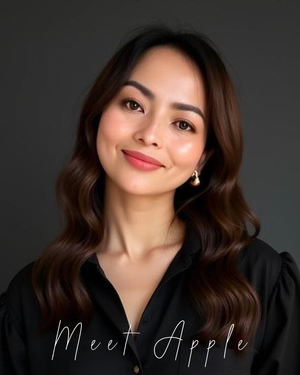
Apple’s approach to lash and brow artistry is influenced by her previous career in professional photography. Photography trains the eye to notice balance, proportion, light, composition and how small adjustments change the way a face is perceived.
That perspective carries into lash design. Rather than asking only, 'Which map is popular?', the more useful questions are: Where should the eye be emphasised? How does the lash line relate to the surrounding features? How much texture feels balanced? And what can the natural lashes comfortably support?
Can lash mapping correct asymmetry?
No face is perfectly symmetrical. Mapping can sometimes be adjusted to create greater visual balance between the eyes, but the goal is not to make both sides artificially identical. Small, considered differences in placement or styling may create a more harmonious overall result.
Can I request a specific lash map?
Absolutely. If you have a map or inspiration image you like, bring it to your consultation. It provides a useful starting point. We can then discuss how to adapt the idea to your eye shape, natural lashes and preferred level of fullness.
Bespoke lashes are more than a treatment name
Choosing Classic, Hybrid or Volume tells us the technique you are drawn to. Mapping is what turns that technique into your look. By considering length, curl, density, texture, natural lash suitability and facial balance together, a lash set can feel intentional rather than simply applied.
Explore treatments | View the Price Menu | Book an appointment